Can I see whales in San Francisco?
Yes, you can see whales off San Francisco, and increasingly inside the bay itself. Which whales, where they show up, your realistic odds by season, and how to book.
 By Rachel Chen, San Francisco bay cruise specialist
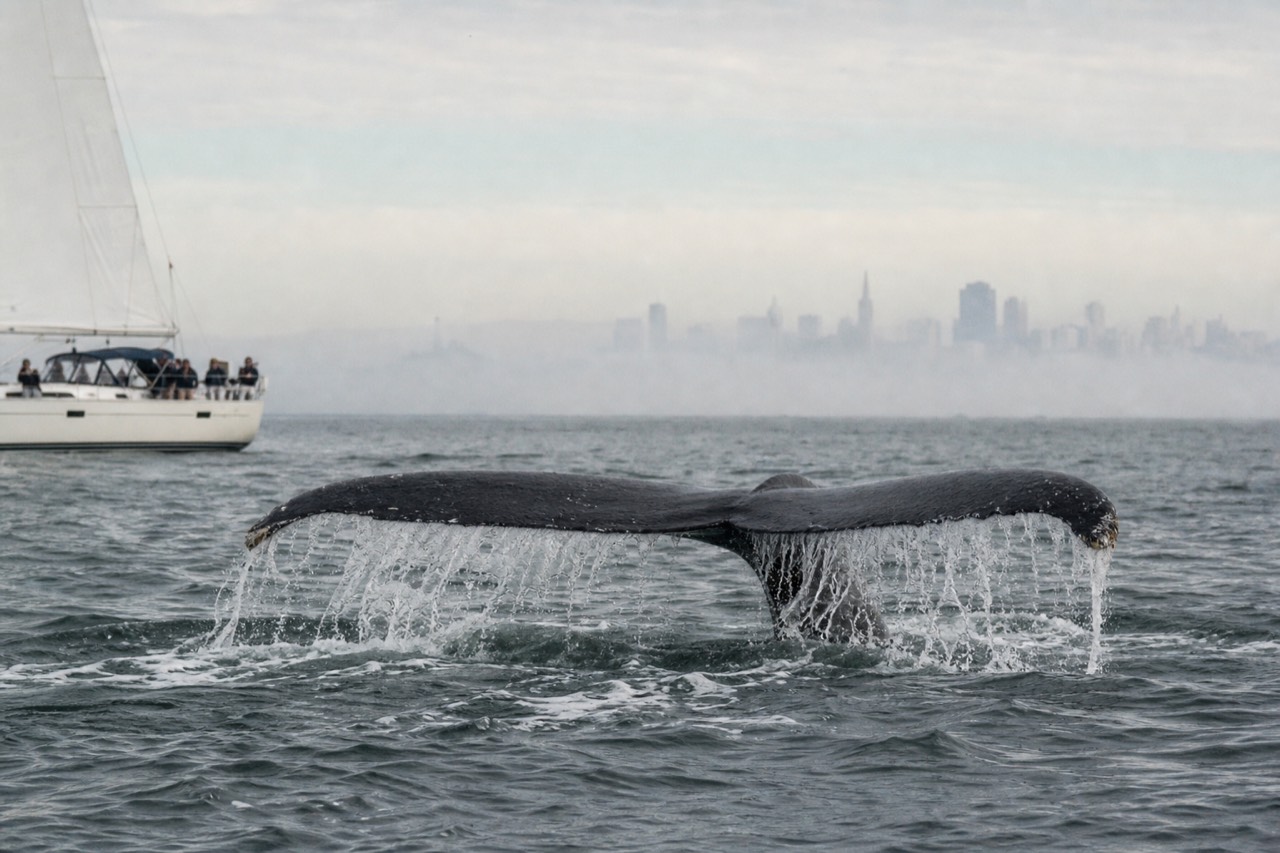
Short answer before you scroll: yes. The cold, food-rich water off San Francisco pulls in some of the biggest animals on the planet, and in the last few years the whales have been coming closer to the city than they have in living memory. A gray whale nosing under the Golden Gate is no longer a freak event. Boats worked humpbacks barely a mile off the bridge through the summer of 2026.
The longer answer is about which whale, when, and from where, because those three things decide whether you actually see one or just hear about the pod that surfaced yesterday. There is a version of this trip with strong odds and a version that leans on luck, and the difference is entirely in how you plan it.
Can you really see whales in San Francisco?
Yes. Three big whales pass this coast: gray whales roughly December through April, and humpback and blue whales roughly May through November. All three feed in the rich waters near the Farallon Islands, and grays increasingly enter the bay itself. On a dedicated whale trip in season, a sighting is likely, though never promised, since these are wild animals.
The waters off the Golden Gate sit inside one of the most productive marine sanctuaries on the West Coast, where cold upwelling feeds a chain that ends in whales. That is why they come, and it is why San Francisco is a genuine whale-watching port rather than a long-shot novelty. The Greater Farallones sanctuary tracks the seasons closely: grays in winter and spring, humpbacks and blues from late spring into fall. You may also spot dolphins, harbor porpoises in the Golden Gate channel, sea lions and seabirds on almost any trip, whale or no whale.
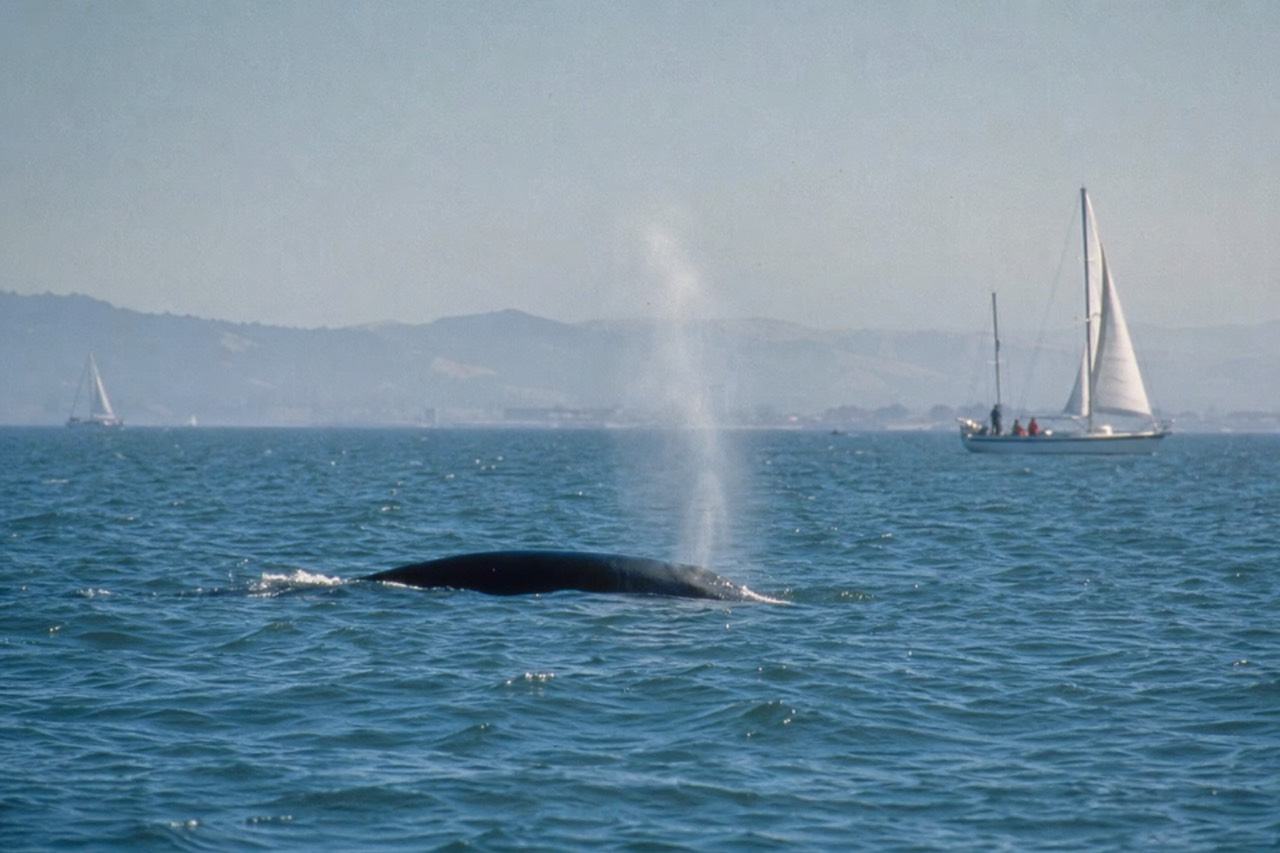
The trip most visitors want is the short, naturalist-led one that leaves Fisherman's Wharf and works the coast and the mouth of the bay. That is the honest sweet spot for actually seeing something without committing a whole day to open ocean. This site, San Francisco Bay Cruises, points you at those real, bookable trips rather than the ones that read like a sure thing and are not.
Can you spot a whale from a regular sightseeing cruise?
Sometimes, as a bonus, but not reliably. Gray whales increasingly enter the bay, so a standard sightseeing loop under the Golden Gate can get lucky in winter and spring. For real odds you want a dedicated whale trip with a naturalist, because those boats go where the whales feed rather than sticking to the fixed landmark route past Alcatraz and the bridge.
A classic bay cruise is built to show you the bridge, the island and the skyline in an hour, and it holds a set route to do it. Whales are not on that itinerary. That said, the bay has changed. Gray whales have been pushing inside the Golden Gate in recent seasons, sometimes lingering for days, so passengers on ordinary sightseeing boats do occasionally get a surprise blow off the bow. It is a lovely piece of luck, but it is luck, not a plan.
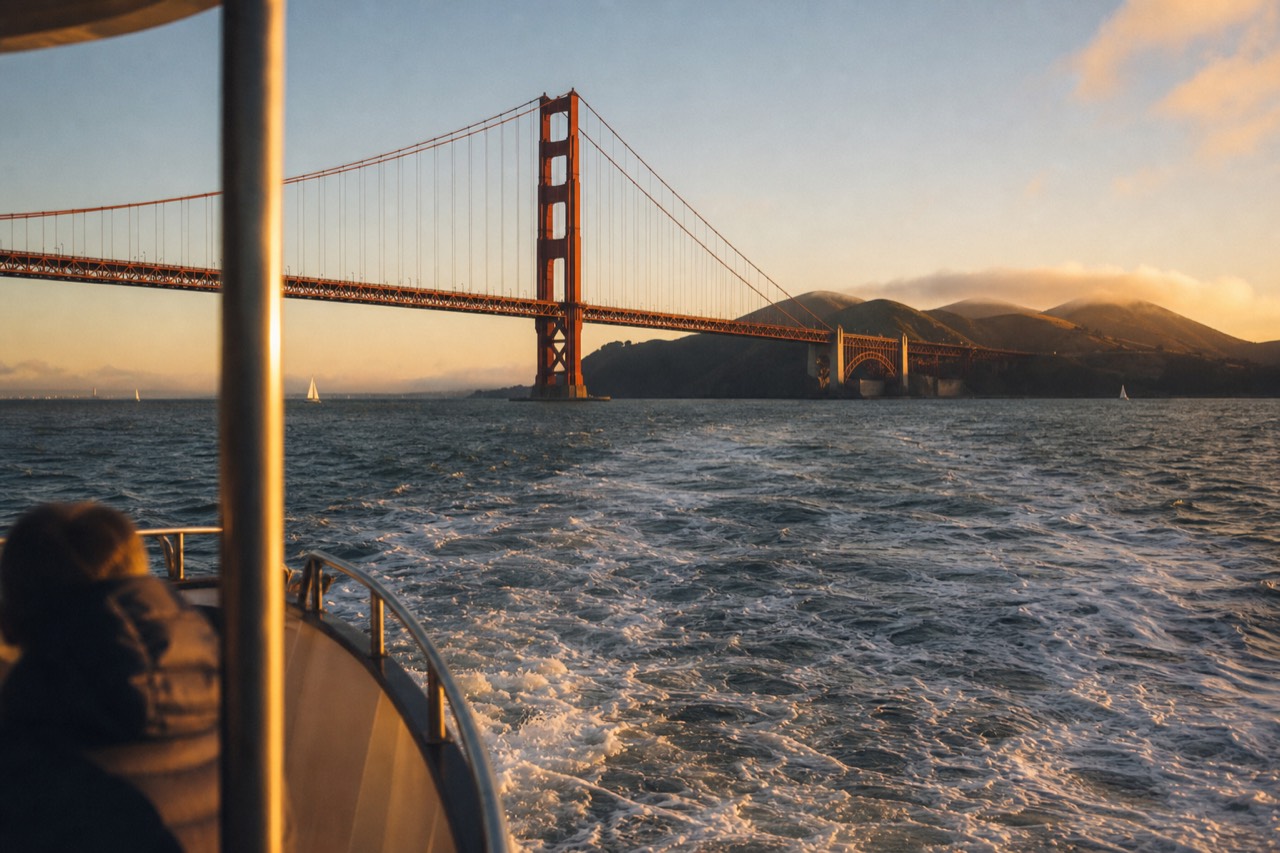
If seeing a whale is the actual goal, book a whale trip. The Red & White Whales of the Bay cruise runs 2.5 hours from Pier 43½ with a live naturalist aboard, targeting grays, humpbacks and blues, and it is rated 4.7 across 31 reviews. It sails Saturday mornings from roughly April into October, so dates are limited; you can check the Saturday sailings and the live price on the operator's page.
What are your realistic odds by season?
Odds swing with the calendar. In gray-whale season, December to April, a coastal trip has a solid shot at a migrating gray. In humpback and blue season, May to November, the offshore feeding brings strong sightings, peaking in early fall. Full-day offshore expeditions cite historical sighting rates around 96%, though short coastal trips are lower and still worth it.
The single biggest lever on your odds is matching the month to the whale. Go in July expecting a gray and you will be disappointed; go in July for a humpback and your chances are good. The table below is the quick read on what is realistically around when.
| Season | What you are most likely to see | Realistic odds | Notes |
|---|---|---|---|
| December to April | Gray whale (migrating), harbor porpoise | Good on a dedicated trip | Grays increasingly enter the bay |
| May to June | Humpback arriving, blue whale building | Building | Shoulder of the warm season |
| July to August | Humpback, some blue whales | Strong, but foggy | Whales present, viewing hampered by fog |
| September to October | Humpback and blue whale peak | Best of the year | Clearest, calmest water too |
| November | Humpback and blue tailing off | Still strong | Late-season value |
Two caveats keep this honest. First, a whale is wild, so even peak season carries no guarantee. Second, the numbers people quote for near-certain sightings, like that 96% figure, come from the long full-day offshore expeditions that reach the Farallones, not from a two-hour coastal trip. A short trip trades some of that odds ceiling for a far easier day. When you want the coastal option that fits a morning, you can check the season's departures and the live price on the listing; the reviews and the rating are shown there.
What is the best way to actually see one?
Book a dedicated whale trip in the right season, not a general sightseeing cruise. Go December to April for grays, May to November for humpbacks and blues, ideally September or October. Pick a short coastal trip for comfort or the long offshore run for the highest odds, dress in real layers, and take motion-sickness tablets before boarding if you are unsure.
The whales are here; the trick is meeting them on their schedule rather than yours. For the fuller picture of the calm coastal trip versus the rough offshore expedition, our complete whale-watching guide walks through the seasickness trade, and if the timing is still open, the best month for whale watching pins down when to go. Comparing ports? Our balanced read on San Francisco versus Monterey helps you choose. The three trips below are the ones to compare before you book.
Frequently asked questions
Can I see whales in San Francisco?
Yes. Gray whales pass the coast December through April, and humpback and blue whales feed offshore May through November. On a dedicated whale trip in season a sighting is likely, though never guaranteed, since whales are wild. Grays increasingly enter the bay itself, so even sightings from inside the Golden Gate have become more common.
Can you see whales from the shore in San Francisco?
Occasionally, yes, especially during gray-whale season from headlands like Point Reyes up the coast, where the National Park Service tracks the migration. Land sightings are a matter of luck and patience, though. A boat that works the coast and the mouth of the bay gives far better odds because it goes to where the whales are feeding.
Do bay sightseeing cruises see whales?
Sometimes, as a bonus, not reliably. Gray whales increasingly enter the bay, so a standard sightseeing loop can get lucky in winter and spring. But those boats hold a fixed route past the bridge and Alcatraz rather than searching for wildlife. For real odds, book a dedicated whale trip with a naturalist aboard.
What kinds of whales can you see near San Francisco?
Mainly three: gray whales in winter and spring, and humpback and blue whales from late spring into fall. Blue whales are the largest animals that have ever lived and cluster from August into October. You may also see dolphins, harbor porpoises in the Golden Gate channel, sea lions and seabirds on most trips.
How much does it cost to see whales in San Francisco?
Short coastal trips start at $76 for the naturalist eco tour and $75 for the Red & White Whales of the Bay cruise, with the current price on each listing. The long full-day offshore Farallones expedition runs far higher, starting around $320, and is booked directly with the operator. Check the live price, since seasonal sales move the figures.