Is whale watching better in San Francisco or Monterey?
An honest San Francisco versus Monterey whale-watching comparison: same whale seasons, different water, trip lengths and logistics, and how to pick the right port for your trip.
 By Rachel Chen, San Francisco bay cruise specialist
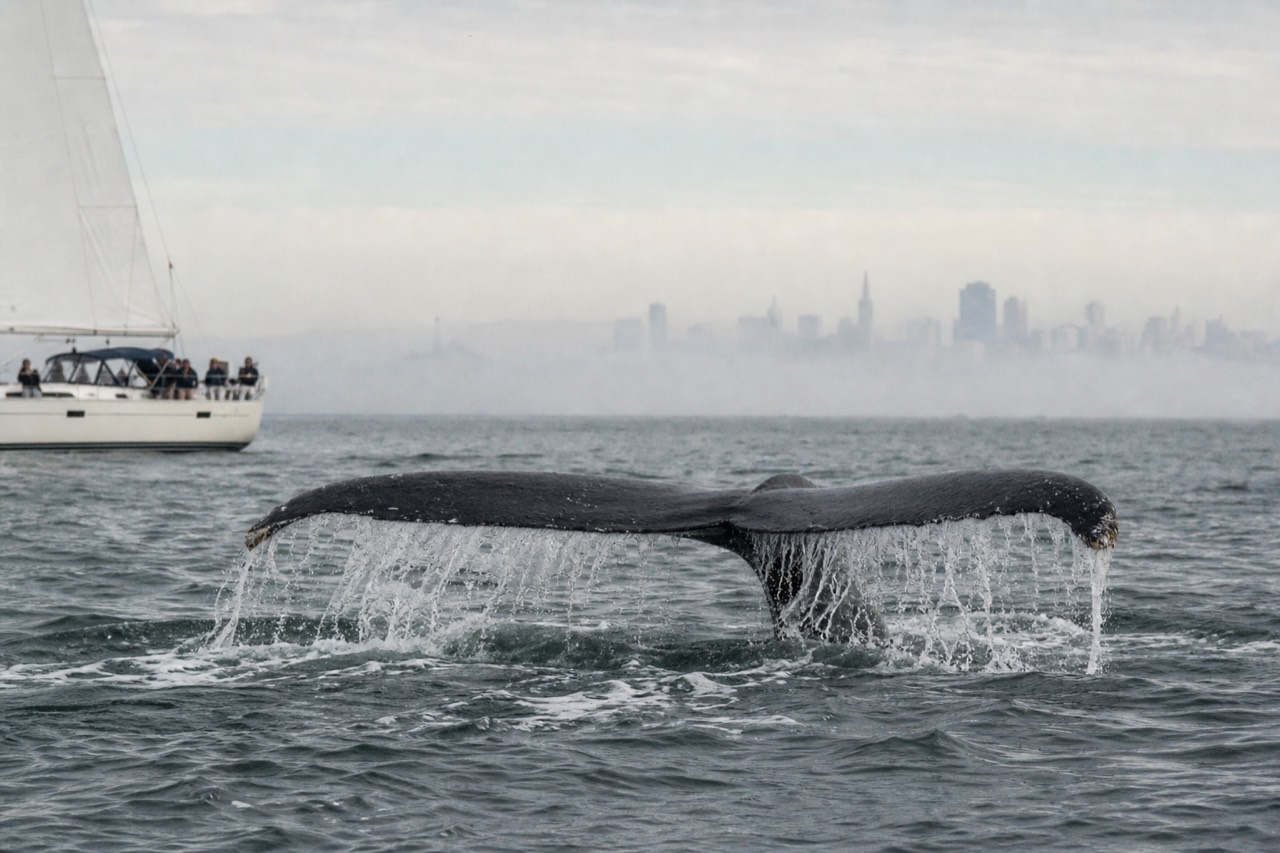
This one starts a lot of arguments among people who love whales, and most of the heat is misplaced. San Francisco and Monterey both sit on the same stretch of California coast, both draw the same whales on the same seasonal clock, and both are genuinely world-class places to see them. Neither is a tourist trap and neither is a secret. The real question is not which is better in the abstract, but which is better for the trip you are already taking.
Because once you strip out the loyalty, the differences come down to water and logistics: how far the boat has to go to reach the whales, how long the trip takes, and what else your day holds. Get those straight and the choice usually makes itself.
San Francisco or Monterey: what is the honest answer?
Both are excellent, and they see the same whales: gray whales roughly December through April, humpback and blue whales roughly May through November. Monterey Bay's deep submarine canyon reaches close to shore, so whales are often found nearer the harbor and the boat ride can be shorter. San Francisco pairs its whales with the Golden Gate and the city, and its grays increasingly enter the bay itself.
Neither port has a monopoly on the animals. The gray migration and the humpback and blue feeding season run the length of this coast, so the calendar is essentially the same in both places, as the Greater Farallones sanctuary and the National Park Service's Point Reyes whale watching tracking both show. What differs is the shape of the water underneath. That single geographic fact drives most of the practical trade-offs below.
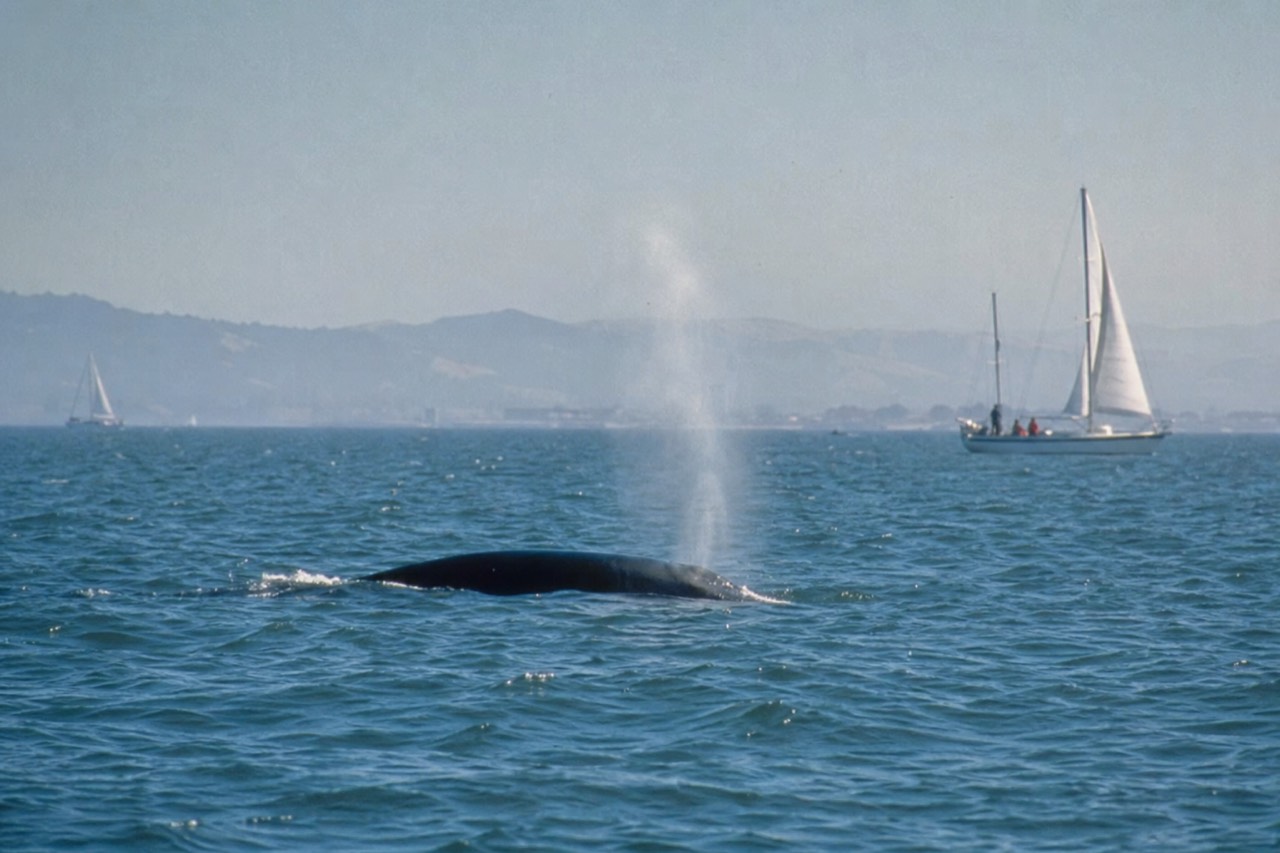
If you are already in San Francisco for the bridge, the city and the bay, the case for staying put is strong, and this site, San Francisco Bay Cruises, is built around those real, bookable San Francisco trips. If whales are the entire reason for the drive and nothing else, Monterey earns its reputation. Both answers are defensible; the three San Francisco trips below are the ones to compare if the city is your base.
What does San Francisco do better?
Convenience and pairing. If you are visiting the city anyway, a San Francisco whale trip needs no extra drive, leaves from Fisherman's Wharf, and slots into a day that also holds the Golden Gate, Alcatraz from the water and the skyline. Grays increasingly push into the bay here, and coastal eco trips run just a few hours, so you keep most of your day.
The strongest argument for San Francisco is simply that you are probably already here. There is no two-hour drive south and back, the docks sit in the middle of the tourist waterfront, and a morning whale trip still leaves the afternoon for the rest of the city. The naturalist-led wildlife eco tour leaves Pier 39 and runs about two and a half to four hours, often slipping under the Golden Gate into the near Pacific before turning back. When your dates fit, you can check the season's departures and the live price on the operator's page; the reviews and the rating are on the listing.
San Francisco has also been having a genuinely good run. Gray whales are increasingly entering the bay itself rather than staying out along the coast, so sightings inside the Golden Gate have climbed, and through the summer of 2026 boats logged humpbacks about a mile beyond the bridge with some close approaches. The Red & White Whales of the Bay cruise, rated 4.7 across 31 reviews, runs Saturday mornings from Pier 43½ roughly April into October with a naturalist aboard; you can see the Saturday dates and the live price directly.
What does Monterey do better?
Shorter trips to the whales, thanks to geography. Monterey Bay is famous for a deep submarine canyon that comes close to shore, which often brings feeding whales nearer the harbor and can mean a shorter run out to them. It is a dedicated whale-watching town with a deep bench of operators, and the sheltered bay can be calmer than the open ocean west of the Golden Gate.
Give Monterey its due. That underwater canyon is the reason the town built its reputation: deep, nutrient-rich water sits unusually close to the harbor, so the whales frequently feed within a relatively short boat ride, and the bay's shape can soften the swell. For a traveler whose whole plan is whales, that efficiency is real, and the town is set up for it end to end.
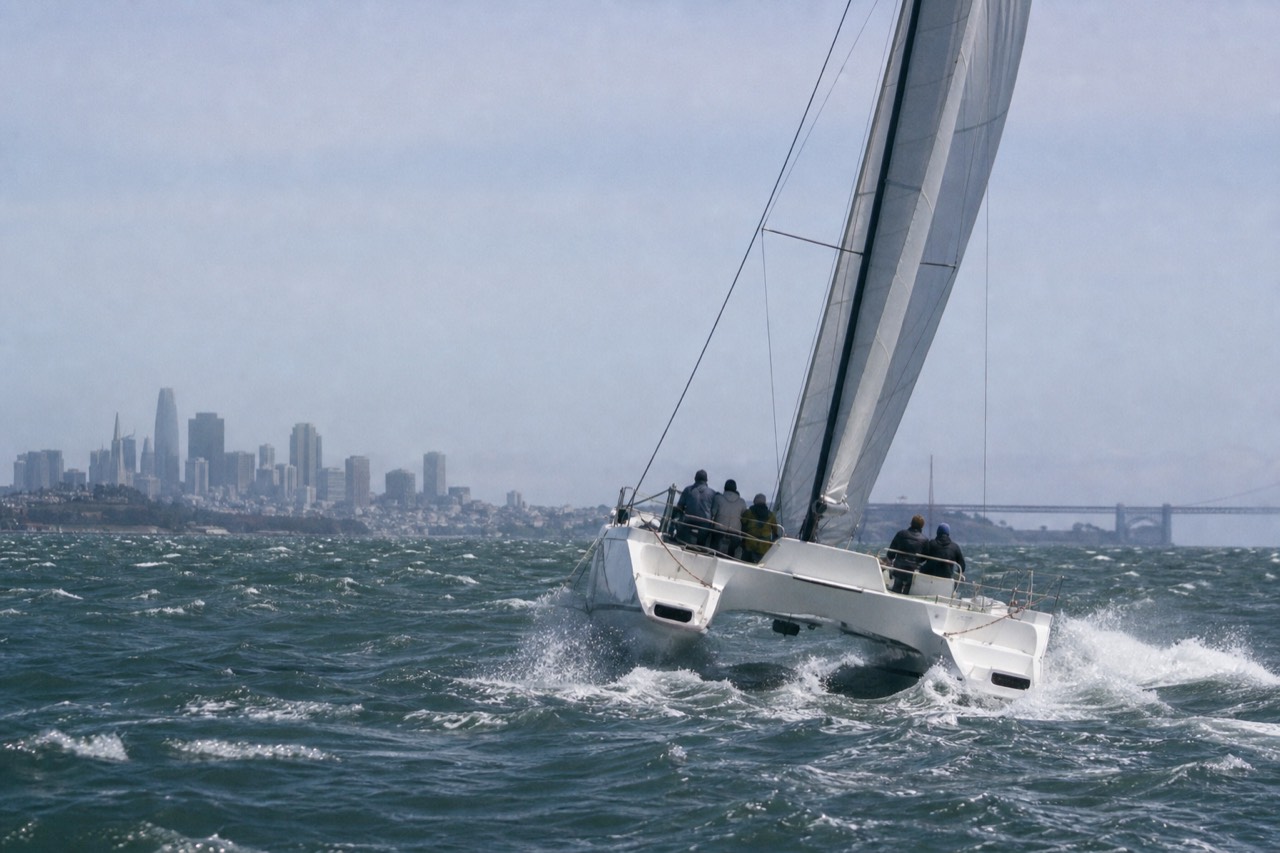
San Francisco's honest counterpoint is the offshore distance. Its richest feeding grounds sit around the Farallon Islands, roughly 27 miles out in a protected sanctuary with no public landing, so the full offshore run is long and can be genuinely rough. The short coastal trips avoid most of that by working the water near the Gate, but they trade a little of the reach that Monterey gets for free. This is the core of the comparison, laid out plainly below.
| Factor | San Francisco | Monterey |
|---|---|---|
| Whales and seasons | Gray Dec to Apr, humpback and blue May to Nov | The same coast, the same seasons |
| Distance to the whales | Rich grounds offshore near the Farallones (~27 mi); coast worked on short trips | Deep canyon close to shore, often a shorter run |
| Typical trip length | Coastal eco trip 2.5 to 4 hr; offshore run all day | Frequently a shorter half-day trip |
| Water | Open ocean off the Gate can be rough | Sheltered bay can be calmer |
| What else your day holds | Golden Gate, Alcatraz from the water, the city | A dedicated whale-watching harbor town |
| Best for | Visitors already in the city | Travelers whose whole plan is whales |
Which should you actually pick?
Pick San Francisco if you are already visiting the city and want whales to be part of a bigger day on the water. Pick Monterey if whales are the sole purpose of the trip and you want the shortest, most efficient run to them. Both share the same seasons, so book December to April for grays and May to November, ideally early fall, for humpbacks and blues either way.
There is no wrong answer, only a right one for your itinerary. If San Francisco is your base, the calm coastal trip is the practical winner and our full whale-watching guide covers the seasickness trade and the offshore option in detail. Still fixing your dates? The best month for whale watching pins down when to go, and if you just want to know your odds, can you see whales in San Francisco lays them out. The three San Francisco trips below are the shortlist if the city wins.
Frequently asked questions
Is whale watching better in San Francisco or Monterey?
Both are excellent and see the same whales on the same seasons. Monterey's deep canyon sits close to shore, so trips there can reach whales faster. San Francisco pairs its whales with the Golden Gate and the city, needs no extra drive if you are already there, and its grays increasingly enter the bay. Pick by your itinerary, not by reputation.
Do San Francisco and Monterey see the same whales?
Largely, yes. Both sit on the same California coast, so gray whales pass both from roughly December through April, and humpback and blue whales feed off both from roughly May through November. The seasons are essentially identical. What differs is the water beneath: Monterey's canyon is close to shore, while San Francisco's richest grounds sit offshore near the Farallones.
Is the water calmer in Monterey than San Francisco?
It can be. Monterey Bay is sheltered and whales often feed within a shorter run, while San Francisco's offshore grounds near the Farallones take the full open-ocean swell and can be rough. San Francisco's short coastal trips avoid most of that by working the water near the Golden Gate, but the long offshore run is the rougher of the options.
Can you whale watch in San Francisco without going far offshore?
Yes. The naturalist-led coastal eco trip from Pier 39 runs about two and a half to four hours and works the coast and the mouth of the bay rather than the long Farallones run. The Red & White Whales of the Bay cruise is a fixed 2.5 hours from Pier 43½. Both stay far closer in than the full offshore expedition.
When is the best time to whale watch on this coast?
September and October are the best overall in either port, pairing peak humpback and blue-whale season with the clearest, calmest weather once the summer fog lifts. For gray whales, book December through April instead. The seasons run the same in San Francisco and Monterey, so timing your trip matters more than choosing between the two ports.